How Long Should Tahajjud Be?
Ask ten worshippers how long Tahajjud should take and you will hear everything from five minutes to half the night — usually stated with more confidence than the sources allow. The truth is calmer: the prayer has no fixed length, the Prophet's ﷺ own nights ranged widely, and the length that matters is the one your life can repeat. Here is the evidence, then the practical scale. Your window tonight is in the tahajjud calculator.
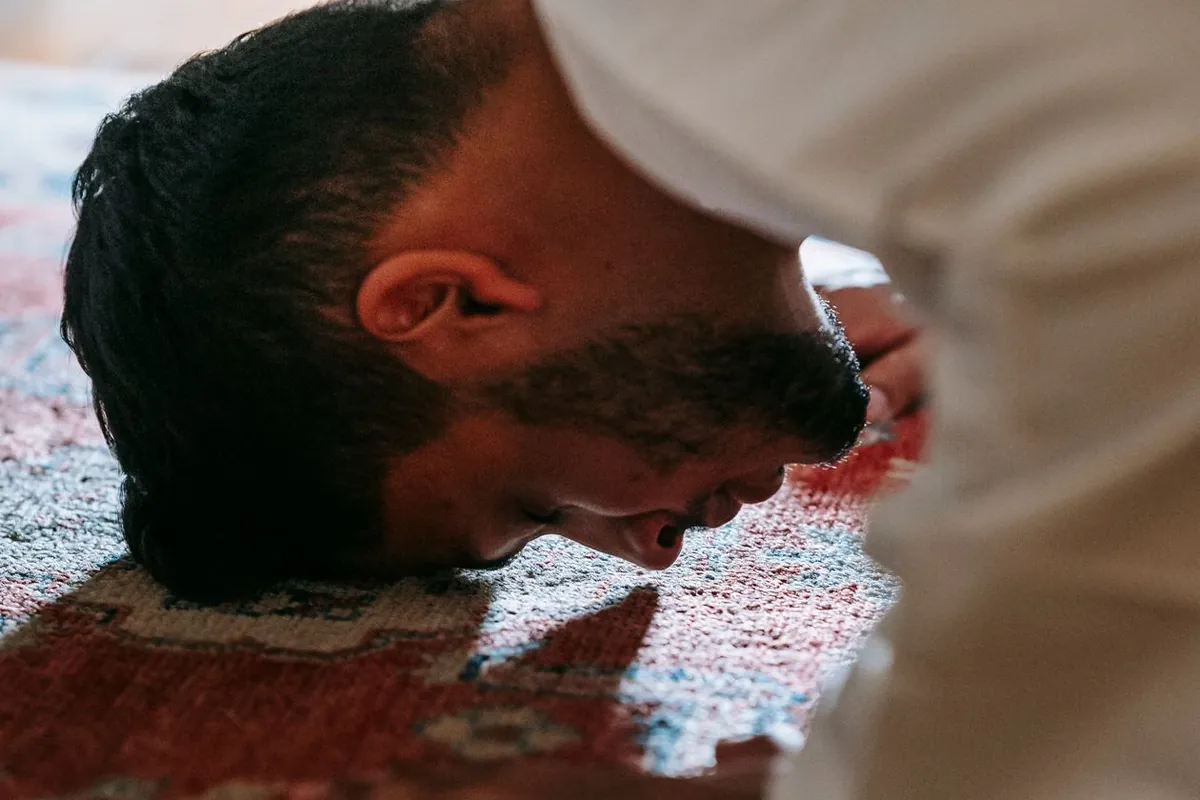
There is no set length — and that is the first fact
No verse and no hadith fixes Tahajjud at a number of minutes or rak'ahs. The prayer is voluntary, and its measures in the sources are measures of quality: presence, unhurried recitation, dua that actually asks. Two rak'ahs in twelve minutes, prayed awake and sincere inside the last third, are a complete Tahajjud. A two-hour prayer prayed in resentful autopilot has length and little else. Start from that freedom, because every workable plan is built on it.
The far end of the scale: the Prophet's ﷺ nights
His longest nights stand at the horizon of the practice. Aisha reported that the Messenger of Allah ﷺ never exceeded eleven rak'ahs, in Ramadan or outside it — but of the first four she said "do not ask about their beauty and length", then four more like them, then three (Sahih al-Bukhari 1147). Al-Mughira reported that he would stand in prayer until his feet or legs swelled, and when asked about it he replied: "Should I not be a thankful slave?" (Sahih al-Bukhari 1130).
These reports describe devotion at its summit — the gratitude of the Prophet ﷺ, whose past and future sins were forgiven, standing anyway. They are given to the ummah as a horizon of love, not as a nightly quota; the same Aisha who described those nights also described the community's ordinary practice, and the Prophet ﷺ himself steered beginners towards the sustainable, as our beginners' guide shows. Measure your night against your own next month, not against his ﷺ best night.
The practical scale
- The floor — about 10 minutes. Two rak'ahs, Witr, and one honest dua. This is the version for exhausted nights, travel, illness and new beginnings. It keeps the thread unbroken, and the thread is the asset.
- The standard — about 30 minutes. Four to eight rak'ahs with unhurried recitation and real time in dua. Most settled worshippers live here on work nights, set backwards from Fajr with the wake-up planner.
- The long night — an hour and beyond. For days off, long winter nights and Ramadan's last ten: length in standing, length in sujud, the recitation ladder climbed properly. Wonderful occasionally, corrosive as a daily demand.
The rak'ah question is the same question in another unit — and has the same answer: pairs, at your capacity, ended by Witr.
When longer becomes worse
Length turns against you at a recognisable point: when tonight's ambition starts eating tomorrow's Fajr congregation, tomorrow's work, or next week's willingness. There is a simple test for whether your current length is right: you should be able to imagine doing exactly this again tomorrow night without flinching. If you flinch, shorten it — the prayer you repeat for a decade will always outweigh the prayer you performed once.
The Prophet ﷺ corrected companions who swung to extremes of worship and neglected their bodies and families — the pattern is as old as the practice. Build length the way the seasons build it: longer in winter's wide nights, shorter in summer's narrow ones (see Tahajjud in Winter), and always one notch below the length that makes you dread the alarm.Frequently asked questions
What is the minimum length of Tahajjud?
Two rak'ahs, followed by Witr — a matter of minutes — is a complete and valid Tahajjud. There is no minimum duration in the sources beyond the prayer being a real prayer: standing, recitation, bowing, prostration, and the intention to be there. On your hardest nights, the minimum is not a compromise; it is the design.
How long did the Prophet ﷺ pray at night?
His nights varied. Aisha's summary is eleven rak'ahs at most, prayed with a length and beauty she marvelled at (Sahih al-Bukhari 1147), and on some nights a single rak'ah of his held three of the longest surahs (Sahih Muslim 772). His pattern also included sleep on both sides of the prayer — the model is depth within a rested night, not sleeplessness.
Is a 15-minute Tahajjud actually worth waking for?
Yes — by the plain arithmetic of the sources. Fifteen minutes inside the last third holds two rak'ahs, Witr and a focused dua, in the very hour the descent hadith describes (Sahih al-Bukhari 1145). The alternative most people actually face is not 15 minutes versus two hours; it is 15 minutes versus nothing. Fifteen wins.
Should I pray longer on some nights than others?
That is how the practice has always breathed. Anchor nights — Friday night, days off, Ramadan's last ten — carry the longer prayer; work nights carry the floor or the standard. A weekly rhythm of lengths is more durable than a daily demand for the maximum, and durability is what turns a practice into a lifetime of last thirds.
Choose your length — the planner turns it into an exact alarm time.
Open the Wake-Up Planner