What to Recite in Tahajjud
You have woken up, made wudu, and unrolled the mat — and now the practical question arrives: what do you actually recite? The Sunnah's answer spans everything from ten short verses to entire surahs in a single rak'ah, and it has a place on that ladder for exactly what you have memorised. Find your place on it below; your start time tonight is in the tahajjud calculator.
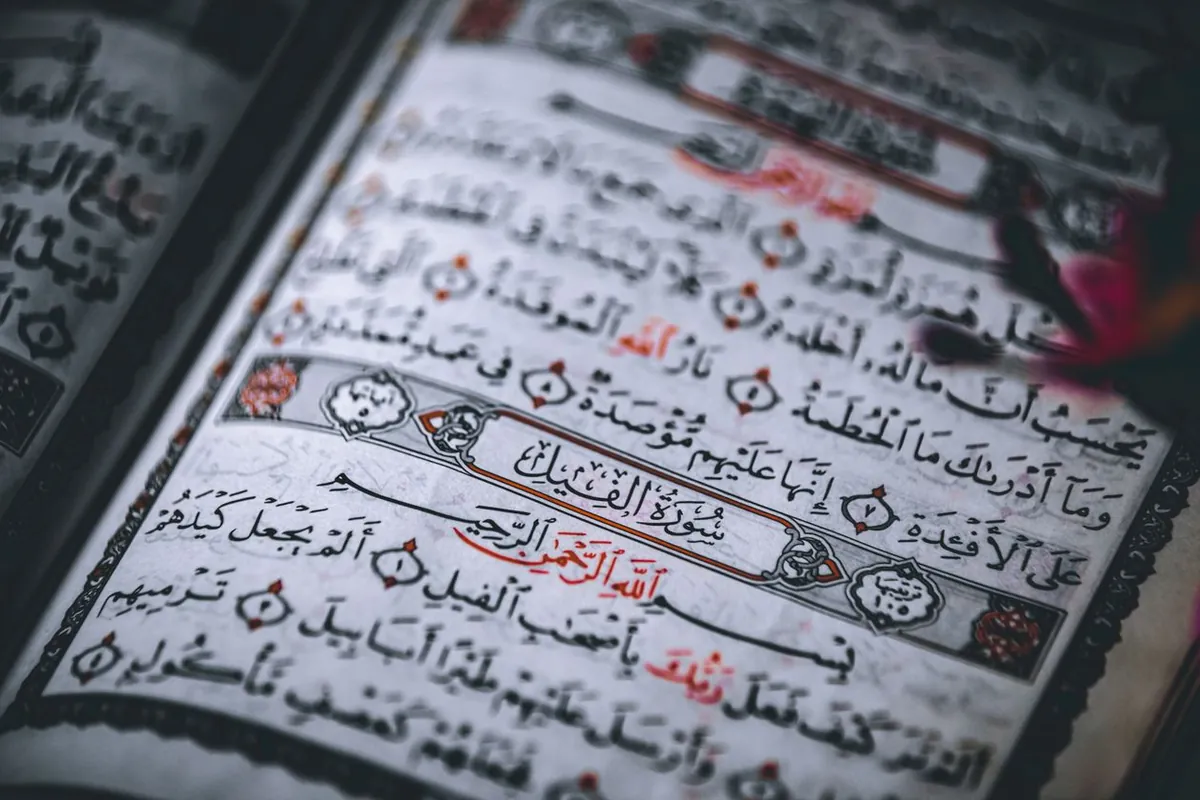
The Prophet's ﷺ recitation: unhurried, not quota-driven
Hudhayfah ibn al-Yaman prayed one night behind the Prophet ﷺ and left us the most vivid description of his recitation we have. He opened with Surah al-Baqarah; Hudhayfah thought he would bow at a hundred verses, but he continued — through the whole of al-Baqarah, then al-Nisa, then Aal-e-Imran, all in a single rak'ah, reciting slowly and deliberately: when he passed a verse of glorification he glorified Allah, when he passed a verse of asking he asked, and when he passed a verse of seeking refuge he sought refuge. His bowing then lasted about as long as his standing had, and his prostration about as long again (Sahih Muslim 772).
Notice what the description emphasises. Not the count — though the count is staggering, some 600 verses in one rak'ah — but the manner: slow, responsive, present. That manner, not the mileage, is what a beginner is meant to copy. Recitation in the night prayer is a conversation, not a distance to cover.
The ladder of verses
For those of us building from the other end, the Prophet ﷺ set out a ladder with a rung for everyone: "Whoever stands in prayer at night reciting ten verses will not be recorded among the negligent; whoever recites a hundred verses will be recorded among the devout; and whoever recites a thousand verses will be recorded among those given an immense reward" (Sunan Abi Dawud 1398; classed authentic by al-Albani).
- Ten verses — a handful of the short surahs you already know: al-Ikhlas, al-Falaq, an-Nas and a couple more. Any honest Tahajjud clears this rung; it exists to tell the beginner that two sincere rak'ahs are not recorded as negligence.
- A hundred verses — a serious but reachable night: Surah al-Mulk (30 verses) together with one of the medium surahs, or a juz'-portion spread across several rak'ahs. This is the rung of a settled habit.
- A thousand verses — the deep end: roughly the last two juz' of the Quran, or al-Baqarah with Aal-e-Imran beside it. The rung of long winter nights and Ramadan's last ten — a horizon, not an assignment.
If you know very little Quran
Then recite the little you know, well. Repeat the short surahs across your rak'ahs — repetition with attention is worship, and nobody's prayer was ever invalidated by loving al-Ikhlas too much. Lengthen what you can lengthen: the standing is not the only place the night prayer grows. A long, unhurried sujud filled with dua in your own language carries the night beautifully, and the duas of the last third were made for exactly the worshipper whose memorisation is small and whose needs are not. Memorisation itself can grow one short surah a week — by Ramadan, the ladder's first rungs will feel different.
One practical note: scholars differ over reciting from a held mushaf or phone during the prayer — many permit it in voluntary prayer, others prefer recitation from memory. If it is the difference between reciting long and not reciting at all, it is worth asking a scholar you trust rather than abandoning the length; the prayer itself is not in question.
Building a recitation you can keep
Rotate what you recite across the week so the prayer stays awake: your longest memorised passages on your anchor nights, short surahs on work nights, one night given to a single beloved passage repeated slowly. Pair the plan with the prayer's other half — the recitation opens the door, and the full step-by-step guide shows where dua and Witr complete the shape. And keep the reference shelf close: our Quran and hadith collection gathers the verses about this prayer itself, which are a beautiful thing to recite inside it.
Frequently asked questions
Which surahs did the Prophet ﷺ recite in the night prayer?
His recitation varied. Hudhayfah's famous report describes al-Baqarah, al-Nisa and Aal-e-Imran in a single rak'ah (Sahih Muslim 772), and Aisha described nights of eleven rak'ahs whose length she marvelled at (Sahih al-Bukhari 1147). He recited long passages unhurriedly, responding to the verses as he passed them — the manner is the lesson, not a fixed nightly list.
Can I repeat the same surah in every rak'ah?
Yes. There is no rule requiring variety across rak'ahs, and worshippers have always repeated beloved passages — the Prophet ﷺ himself is reported to have spent a night repeating a single verse until morning. Variety helps attention for some people; familiarity deepens it for others. Pray the way that keeps your heart present.
How many verses should a beginner aim for?
Aim for the first rung and clear it with dignity: ten verses, slowly, inside two rak'ahs — not recorded among the negligent (Sunan Abi Dawud 1398). When ten feels small, grow towards a hundred across more rak'ahs. The ladder is climbed over months and years; it was given as encouragement, not as a standard to fail.
Is it better to recite long or to pray more rak'ahs?
The sources praise both, and the Prophet's ﷺ nights combined them at a level that is a horizon rather than a template. For ordinary weeks, choose by your state: on a night of energy, lengthen the recitation; on a night of little time, keep the rak'ahs short and protect the appointment. A short prayer prayed is better than a long one planned — every time.
However much you recite, it starts by waking inside the window — find yours.
Open the Tahajjud Calculator